Does Hypnotherapy Work for Anxiety? What Actually Happens in a Session

hypnotherapy room
Picture of Maree-Nicole

Maree-Nicole

Clinical Hypnotherapist - Life Coach - Reiki Master
Number 1 Best Seller Author of I See You

Yes — hypnotherapy is a clinically recognised approach that works with the subconscious mind to calm anxiety at its root, not just manage its symptoms.

It’s 2am and your mind won’t stop.

You’ve replayed the conversation from Tuesday eleven times. You’ve rehearsed tomorrow’s meeting, planned for three disasters that will probably never happen, and somewhere in there you’ve also decided you’re failing at everything. Your body is exhausted. Your mind didn’t get the memo.

If you found this article by typing “hypnotherapy for anxiety” into Google at some strange hour, I want you to know something first: the fact that you’re looking means part of you already knows this isn’t how you’re meant to live. That part of you is right.

Why anxiety doesn’t listen to logic

Here’s the thing nobody tells you about anxiety: you can’t think your way out of it, because it doesn’t live in the thinking part of your mind.

You already know the worst-case scenario probably won’t happen. You know the email wasn’t that bad. Knowing hasn’t fixed it — because anxiety isn’t a knowledge problem. It’s a pattern that runs underneath your conscious mind, in the part of you that learned somewhere along the way that the world isn’t safe, that you have to stay alert, that relaxing is dangerous.

For a lot of the women I work with, that pattern started years ago. Growing up walking on eggshells. A relationship where you learned to scan the room before you spoke. Years of being the one who holds everything together. Your nervous system learned to survive that way — and it’s still running the same program, long after the danger has passed. (If that story of learning to stay guarded in a relationship sounds familiar, I’ve written more about how those patterns form and heal here.)

That’s why willpower, positive thinking and being told to “just relax” don’t work. You’re using the conscious mind to argue with the subconscious mind, and the subconscious always wins.

So does hypnotherapy actually work for anxiety?

Hypnotherapy works with the part of the mind where anxiety actually lives — and that’s exactly why so many people find it helps when talking about the problem hasn’t been enough.

In hypnotherapy, your body finally drops into a deeply calm state — often the calmest some clients have felt in years — and in that state, the subconscious mind becomes open to change. We’re not covering the anxiety up or teaching you to breathe through it (though breath matters). We’re going to the root: the old patterns, the beliefs formed long ago, the moments your nervous system decided it had to stay on guard. And we’re updating them.

Research backs this up too — clinical studies have found hypnosis meaningfully reduces anxiety symptoms for most people who try it, with the benefits often continuing to grow well after sessions end.

I’ll be honest with you, because honesty is how I work: hypnotherapy isn’t a magic wand, and anyone who promises to erase your anxiety in one session isn’t being straight with you. What it is, in my experience with client after client, is one of the most direct ways to reach the level where real change happens. And if you’re currently working with a doctor or psychologist, hypnotherapy sits beautifully alongside that — this is about adding to your support, never replacing it.

What actually happens in a session

Let’s clear something up, because it’s the question underneath almost every first phone call: no, you won’t lose control.

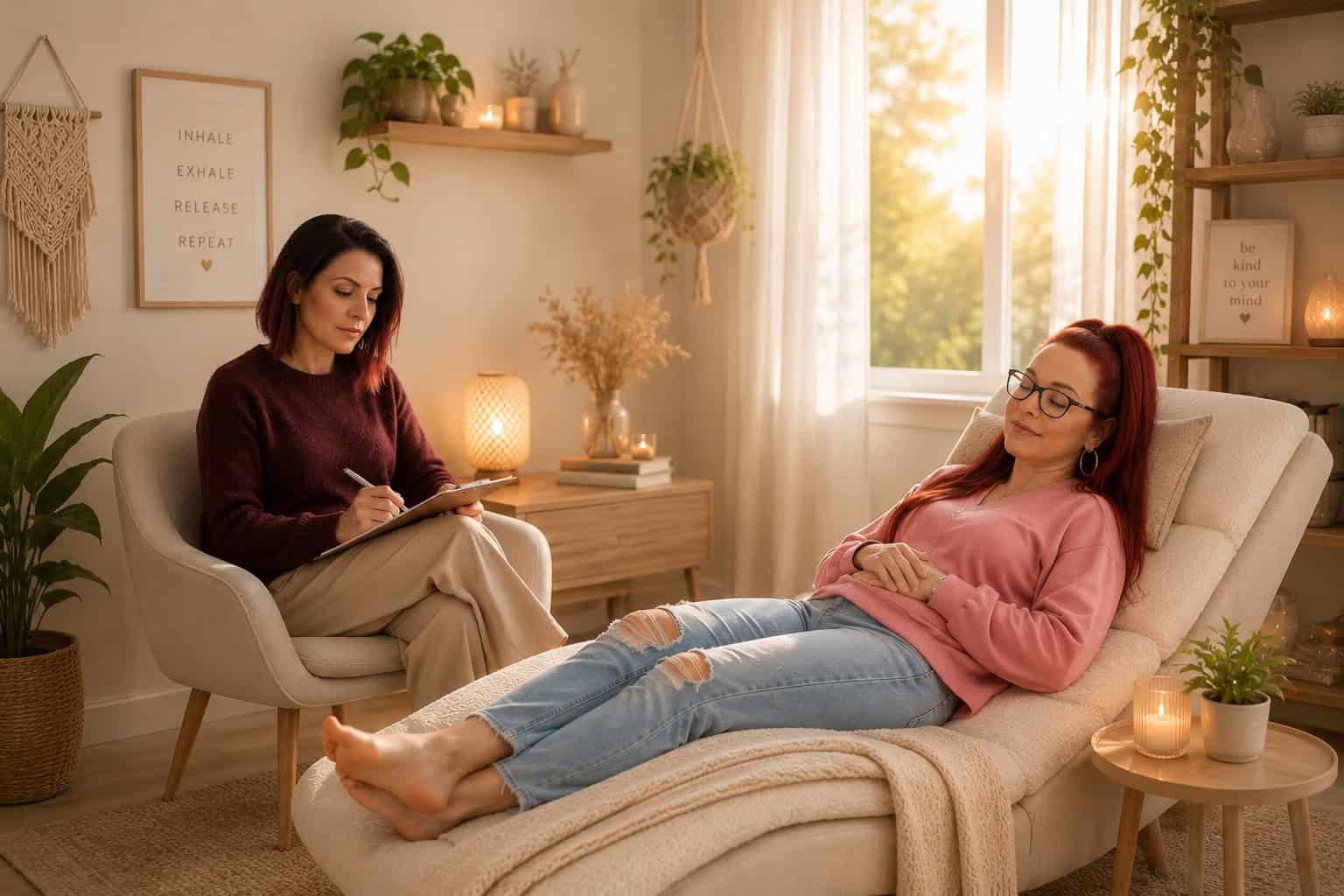
Forget stage hypnosis. There’s no swinging watch, no clucking like a chicken, no handing your mind over to someone else. Hypnosis is simply a deeply relaxed, focused state — you’re aware the whole time, you can hear everything, and you’re always in charge. You’ve actually been in light hypnosis before: that drifting feeling just before sleep, or driving a familiar road and arriving without remembering the trip. That’s the state. We just use it on purpose.

A session with me looks like this:

We talk first. Not surface talk — real talk. As a Clinical Hypnotherapist and Psychotherapist, I want to understand where your anxiety shows up, what it protects you from, and where it likely began. Anxiety always makes sense once you find its story.

Then you get comfortable, close your eyes, and I guide you into relaxation. Your body softens, your mind quietens, and we work directly with the subconscious — releasing the old pattern, resolving what created it, and installing a new way of responding. Depending on what you need, I may weave in Time Line Therapy® to release emotion from past events, or Parts Therapy to work with the part of you that believes it has to worry to keep you safe.

You come back feeling calm. Most clients open their eyes surprised — at how deep they went, and how light they feel.

How many sessions does it take?

Everyone is different, and I’ll never pretend otherwise. Some clients feel a real shift after their first session. For most, anxiety work unfolds over a handful of sessions, because we’re not just calming symptoms — we’re rewiring a pattern that took years to build. When anxiety is tangled up with older wounds or a lost sense of who you are (and it so often is), that’s where my Signature Breakthrough Program comes in, and we’d talk honestly about whether that’s the right path for you.

That’s exactly what the free 30-minute consultation is for. No pressure, no scripts — just a real conversation about what you’re carrying and whether this work is right for you.

You don’t have to live in Sydney to do this work

I see clients in Sydney and right across Australia via Zoom — and hypnotherapy online works just as powerfully as in person. You’re in your own home, in your comfiest chair, and honestly? Some clients drop into relaxation even more easily there. So if you’ve been searching for a hypnotherapist “near me” and coming up short — near doesn’t matter. Willing does.

Common questions about hypnotherapy for anxiety

Is hypnotherapy safe for anxiety?
Yes. You’re aware and in control the entire session — you can open your eyes, speak, or stop at any time. It’s a guided relaxed state, not something done “to” you.

How is hypnotherapy different to CBT for anxiety?
CBT works with the conscious, thinking mind — noticing and reframing thoughts as they happen. Hypnotherapy goes a layer deeper, working with the subconscious patterns that create those thoughts in the first place. Many clients find the two work well together rather than as competitors.

Can hypnotherapy help with panic attacks or social anxiety, not just general worry?
Yes — the same underlying approach applies, whether anxiety shows up as generalised worry, panic, or fear specifically in social situations. The pattern we’re working with is the nervous system’s learned response, whatever triggers it.

Do I need to be easily “hypnotizable” for this to work?
No. Almost everyone can enter the relaxed, focused state that hypnotherapy uses — it’s closer to daydreaming than anything mysterious. If you can imagine, you can be guided into hypnosis.

Is one session enough?
Some clients feel real shifts from a single session, but lasting change with anxiety usually takes a handful of sessions, since we’re working with a pattern that built up over years, not days.

The quiet truth about anxiety

After years of doing this work — and years of living my own version of it — here’s what I know: anxiety is so often the noise your mind makes when you’ve drifted too far from yourself. When you’ve spent so long managing everyone and everything else that somewhere along the way, you went missing.

Calming the anxiety is where we start. Coming home to yourself is where we’re going.

If any of this landed somewhere true in you, book your free 30-minute consultation and let’s talk.

Nothing changes unless you do.

Maree-Nicole Clinical Hypnotherapist & Psychotherapist Soulful Healing Hypnotherapy — Sydney, NSW & via Zoom


You might also enjoy

Woman relaxed on her couch at home with eyes closed during an online hypnotherapy session, laptop open showing the video call — illustrating that hypnotherapy works just as well over Zoom as in person.

Do I Need to See You in Person for This to Work? Hypnotherapy via Zoom vs. Face-to-Face

Yes — hypnotherapy works just as effectively over Zoom as it does in person, because hypnosis is a state you create yourself; my voice and guidance are simply how we get you there, and that works exactly the same through a screen as it does across a room. I get some version of this question in almost every first phone call: “This is going to sound strange, but… does it actually work over video? Don’t you need to, like, be in the room with me?” It’s a completely fair question, and if it’s the thing quietly stopping you from booking, I want to answer it properly. Where this assumption comes from Most of what people picture when they imagine hypnosis comes from stage shows or old movies — a swinging watch, a hypnotist’s stare, something being done to someone. If that’s the picture in your head, then of course being in the

Read More
oman standing alone in her kitchen in the evening, pouring a glass of wine, looking tired and lost in thought — symbolising the automatic habit of drinking to unwind after a long day

Why Do I Always Say “Just One” and Have Five? Hypnotherapy for Drinking

Why do you always tell yourself “just one” and end up finishing the bottle? It’s 6pm and the glass is already in your hand before you’ve really decided to pour it. You told yourself last night would be the last “just because it’s Friday” night. You told yourself this morning you’d have an easy week. And yet here you are again, glass one turning into glass three, the same quiet promise to yourself sitting somewhere underneath it: tomorrow I’ll cut back. If that’s you, I want to say something first: this isn’t a willpower problem, and it isn’t a character flaw. Somewhere along the way, a part of you learned that a drink is how you switch off, how you numb the noise, how you get through the end of a long day — and that part of you has been doing its job faithfully, exactly the way it learned to.

Read More
Woman lying awake in bed at night under warm lamp light, eyes open and unable to sleep — symbolising insomnia and a wired, exhausted nervous system.

Why Can’t I Switch My Brain Off at Night? Hypnotherapy for Insomnia

Yes — hypnotherapy is one of the most direct ways to work with insomnia, because it calms the exact nervous system response that’s keeping your mind wired at the moment you most need it to rest. It’s midnight, then it’s 1am, then you’ve stopped checking the clock because knowing the number only makes it worse. Your body is exhausted — heavy, aching for sleep — but your mind has other plans. It’s replaying the day, drafting tomorrow’s to-do list, circling back to a conversation from three weeks ago for no reason at all. You know you’ll pay for this tomorrow. Knowing hasn’t made it stop. If you’ve tried the magnesium, the sleep hygiene checklist, the blackout curtains and the “no screens an hour before bed” and you’re still lying there wide awake most nights — you’re not doing it wrong. You’re dealing with a nervous system that hasn’t gotten the

Read More
Woman standing apart at a social gathering, looking watchful and distant while holding a wine glass — symbolising the feeling of social anxiety even while present.

Why Do I Replay Every Conversation Afterwards? Hypnotherapy for Social Anxiety

Yes — hypnotherapy is an effective, evidence-informed way to work with social anxiety, because it goes to the subconscious pattern driving it rather than just managing the symptoms on the surface. It’s 11 pm, and you’re doing it again. Running back through the conversation from the work drinks earlier. The thing you said that landed weird. The pause before someone laughed. The way a friend’s face changed for half a second, and you’re still not sure what it meant. You’ve analysed it from every angle. You’ve decided you probably said too much. Or not enough. Or the wrong thing entirely. Meanwhile the other people in that conversation are almost certainly not thinking about it at all. Maybe you’ve cancelled plans because you couldn’t face “performing” all evening. Maybe you’ve gone quiet in a group so nobody would have a reason to notice you. Maybe your heart starts racing before you’ve

Read More

Not sure where to start? Let’s explore what’s right for you.